
EV Battery Health Diagnostics for Independent Repair Shops: The New Frontier
There’s a quiet revolution happening under the hoods—or rather, under the floorboards—of modern cars. Electric vehicles aren’t just a trend anymore; they’re a growing slice of the automotive pie. And for independent repair shops, that means one thing: it’s time to get comfortable with battery health diagnostics. Not just because it’s cool tech, but because it’s becoming a survival skill.
Honestly, a few years ago, most independent shops would’ve laughed at the idea of touching an EV battery. Too dangerous, too proprietary, too… much. But here’s the deal: the landscape is shifting. By 2030, EVs could account for over 40% of new car sales in the U.S. That’s a lot of batteries that will eventually need checking, testing, and yes—sometimes replacing. The shops that adapt now will own the market later.
Why Battery Health Diagnostics Matter More Than Engine Codes
When a gas car rolls in with a rough idle, you plug in a scanner, read the codes, and start diagnosing. Simple, right? Well, EVs are a different beast entirely. The battery pack is the heart, brain, and wallet of the vehicle. A degraded battery doesn’t just affect range—it affects safety, resale value, and performance. And here’s a stat that might surprise you: battery degradation is rarely linear. It can drop 10% in the first two years, then plateau for five, then suddenly fall off a cliff. That unpredictability is exactly why diagnostics are so critical.
For independent shops, this isn’t just about reading a State of Health (SoH) number. It’s about understanding the story behind that number. Why is the battery at 88% health instead of 95%? Was it fast-charged too often? Did the owner live in a hot climate? Did they regularly drain it to 5%? These are the questions that turn a simple diagnostic into a valuable service.
The Tools of the Trade: What You’ll Actually Need
Okay, let’s get practical. You can’t just use a $50 OBD-II scanner and call it a day. EV battery diagnostics require specialized equipment, and honestly, the market is still maturing. But there are some solid options out there that won’t break the bank—if you know what to look for.
1. OBD-II Adapters with EV-Specific Apps
These are your entry-level tools. Think of them as the stethoscope of EV diagnostics. Apps like Car Scanner or Torque Pro (with the right PID sets) can pull battery voltage, temperature, and even some SoH data from most EVs. The catch? They’re not always accurate, and they don’t give you the full picture. But for a quick health check, they’re a great starting point.
2. Professional Diagnostic Platforms
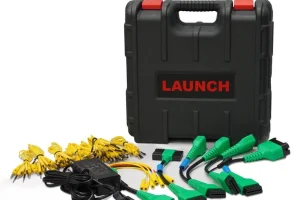
This is where the real money is. Tools like Autel’s EV battery diagnostic packages or Launch’s X-431 series offer deep-level battery analysis. They can measure cell voltages individually, check insulation resistance, and even run capacity tests. These tools aren’t cheap—expect to spend anywhere from $2,000 to $10,000—but they’re the difference between guessing and knowing.
3. Thermal Imaging Cameras
Here’s a trick that many shops overlook. A thermal camera can spot hot spots in a battery pack that indicate weak cells or poor connections. It’s not a standalone diagnostic tool, but combined with data from a proper scanner, it’s incredibly powerful. Plus, it looks cool to customers when you show them a thermal image of their battery—trust me, it builds confidence.
Understanding the Key Metrics: SoH, SoC, and Internal Resistance
Let’s break down the jargon, because you’ll need to explain this to customers without making their eyes glaze over.
State of Health (SoH) is the big one. It’s a percentage that compares the current capacity to the original capacity. A new battery is 100%. Most manufacturers consider 70% the threshold for replacement under warranty. But SoH isn’t everything—it’s a snapshot, not the whole movie.
State of Charge (SoC) is just the current charge level, like a fuel gauge. Seems simple, but here’s the kicker: SoC affects how you interpret SoH. You can’t accurately measure battery health on a fully charged or fully depleted pack. You need to test within a specific range, usually 20-80%.
And then there’s internal resistance. This is the sneaky one. Think of it like cholesterol for batteries—high levels are bad, but you won’t feel it until it’s a problem. High internal resistance means the battery struggles to deliver power efficiently, which causes heat, which causes more degradation. It’s a vicious cycle, and measuring it is crucial for spotting failing cells before they become a safety hazard.
Safety First: The Elephant in the Garage
I’d be lying if I said I wasn’t nervous the first time I opened an EV battery enclosure. It’s not like popping the hood on a Civic. We’re talking about 300-800 volts of DC current. A mistake here isn’t a repair bill—it’s a funeral.
So, here’s the non-negotiable advice: get certified. Organizations like ASE now offer EV-specific certifications, and many manufacturers have their own training programs. It’s not just about learning the tech; it’s about learning the safety protocols. You need insulated gloves, rated tools, and a clear understanding of lockout/tagout procedures. And honestly, even with all that, you should still approach every battery with a healthy dose of respect.
Also, don’t forget the physical side. Batteries are heavy. A Tesla Model S pack weighs over 1,200 pounds. You’re going to need proper lifting equipment, not just a couple of burly mechanics and a prayer.
Building a Diagnostic Workflow That Works
So, you’ve got the tools, you’ve got the training. Now what? Here’s a workflow that I’ve found works well in practice:
- Visual inspection first. Look for physical damage, corrosion, or swollen cells. This catches obvious issues before you plug anything in.
- Run a full OBD scan. Pull all battery-related codes and log the SoC. If the SoC is below 20% or above 80%, charge or discharge it to the proper range before proceeding.
- Perform a capacity test. This takes time—sometimes hours—but it gives you the true SoH. Don’t skip this step, even if the customer is in a hurry.
- Check individual cell voltages. Look for variance. A healthy pack should have cells within 0.05V of each other. Anything more suggests a weak cell.
- Measure internal resistance. This is your early warning system for future failures.
- Use thermal imaging. Look for hotspots during a load test. This can confirm suspicions from the resistance readings.
Follow this process, and you’ll catch issues that most dealerships miss. That’s your competitive edge.
Turning Diagnostics into Revenue
Here’s where it gets interesting. Battery diagnostics aren’t just a service—they’re a gateway. A customer comes in for a battery health check, and you find that their SoH is at 82%. You deliver the news, explain what it means, and suddenly you’re having a conversation about charging habits, battery conditioning, and maybe even a future replacement. That’s not a sales pitch; that’s building trust.
Pricing is tricky, though. Some shops charge a flat fee ($100-$200) for a full diagnostic report. Others bundle it with a multi-point inspection. I’ve seen shops offer it for free to EV owners, hoping to win their loyalty for future work. Honestly, that’s not a bad strategy—the lifetime value of an EV customer is high, especially if you become their go-to for battery health over the years.
The Data Dilemma: Access and Proprietary Systems
Let’s be real—this isn’t all sunshine and roses. One of the biggest hurdles you’ll face is data access. Manufacturers like Tesla and Rivian are notoriously tight-lipped about their battery management systems. They want you to go to their service centers, not your local garage.
But here’s the thing—the aftermarket is fighting back. Right-to-repair laws are gaining traction, and companies like Geotab and Recurrent are aggregating battery data from thousands of vehicles, making it more accessible to third-party shops. It’s not perfect, and you’ll still hit walls with certain models, but the trend is moving in your favor. Patience is key.
Future-Proofing Your Shop
So, what’s the takeaway here? Well, the independent repair shop isn’t dying—it’s evolving. The shops that embrace EV battery diagnostics will become the trusted experts in their communities. They’ll be the ones who can tell a customer, “Your battery is fine, but your charging habits are shortening its life,” and actually help them fix it.
It’s not going to be easy. There’s a learning curve, a financial investment, and a lot of new jargon to master. But think about it—when was the last time you had a genuinely new revenue stream land in your lap? This is that moment. The technology is here, the demand is growing, and the competition is still thin.
In a way, EV battery diagnostics are like learning a new language. At first, it’s all gibberish—voltage curves, cell balancing, thermal runaway. But after a while, patterns emerge. You start to see the story in the numbers. And once you can read that story, you’re not just a mechanic anymore. You’re a guardian of the vehicle’s most valuable asset. That’s a pretty good position to be in.
The road ahead is long, but the destination is clear. Independent shops that invest in battery health diagnostics today will be the ones leading the charge tomorrow. And that’s not just good for business—it’s good for the future of mobility.